How to choose the right Sanderling barefoot sandals for your child
Choosing the right barefoot sandals for kids can feel confusing — especially when all options seem flexible, lightweight, and designed for natural movement. When looking for barefoot sandals with a wide toe box, zero drop, and flexible sole, the real difference often comes down to how the sandal is built for your child’s stage and daily use.
4/15/20262 min read
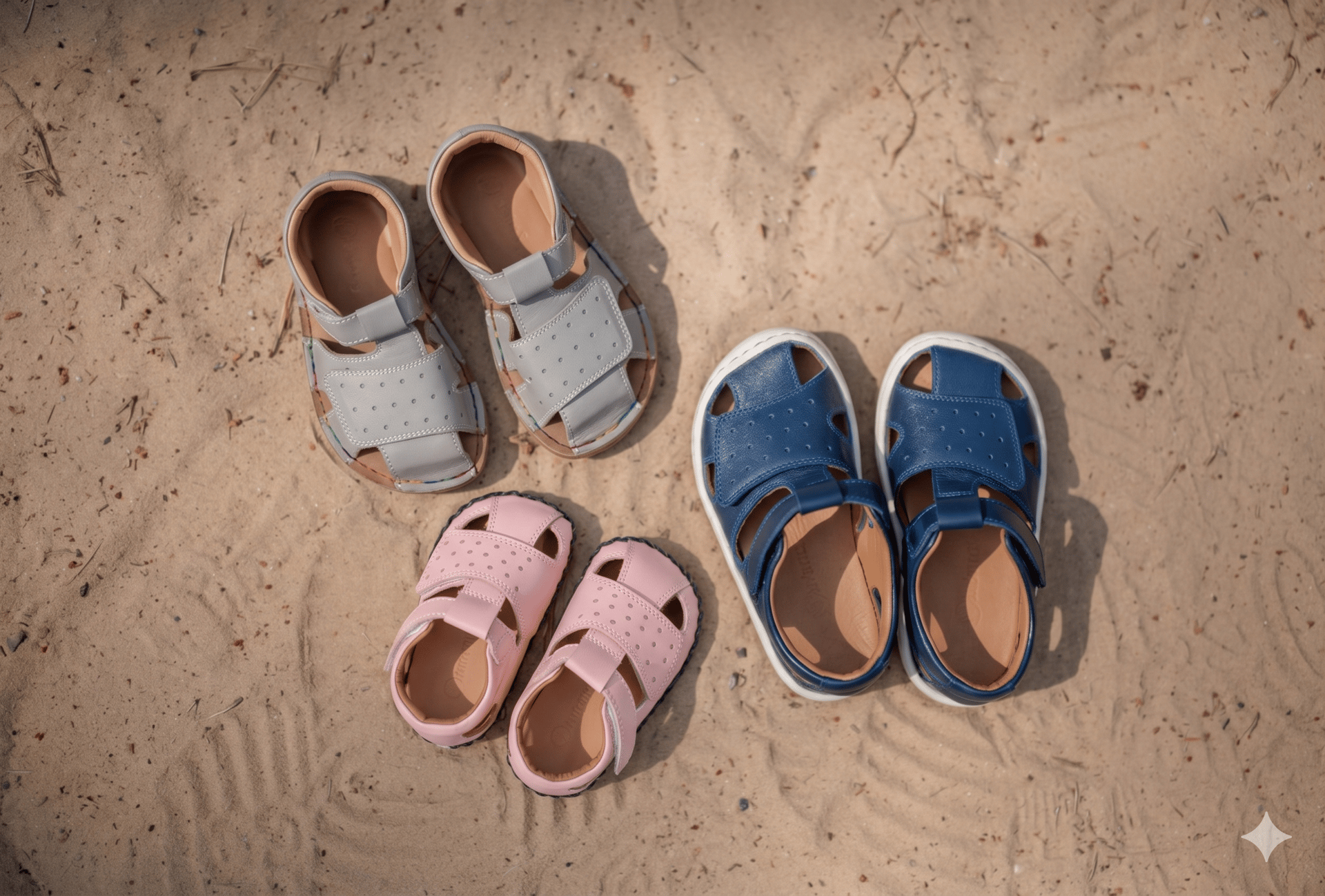
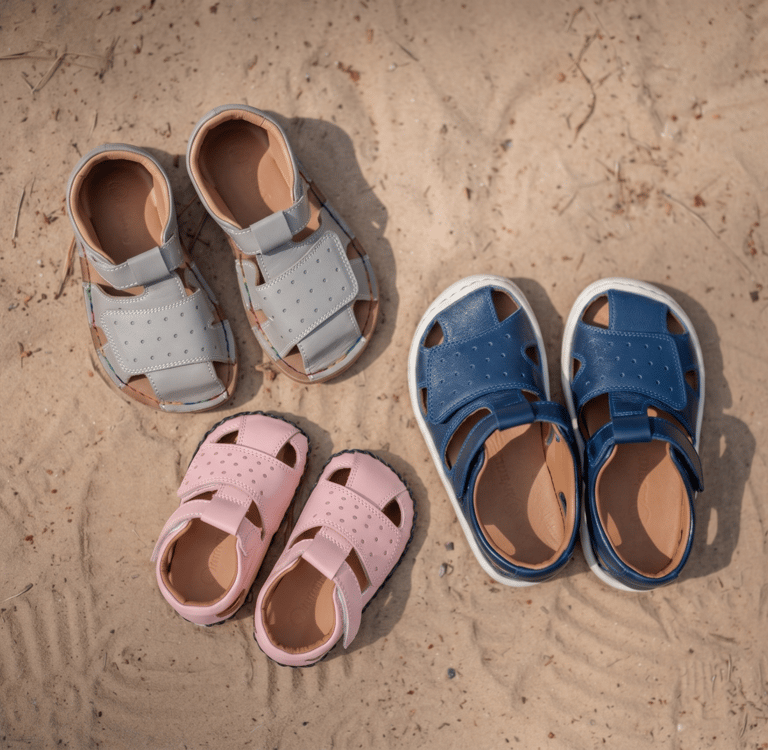
If you’ve ever looked at our Sanderling sandals and thought — they all look quite similar — you’re not wrong.
They do come from the same idea.
All three models are built on the same barefoot foundation: a thin and flexible sole, zero drop, and a wide toe box that allows natural movement. Alongside that, all Sanderling sandals feature our adjustable fit system, designed to adapt to different foot widths — even in the toe area, where proper space matters most.
So the difference is not in what they are, but in how they are shaped for different stages and needs.
Little Sanderling — for first steps and the first summer
Little Sanderling was created for the very beginning.
When children start walking, everything is new — their balance, their movement, their confidence. At this stage, footwear should interfere as little as possible, while still being practical enough for real life.
That’s why Little Sanderling is built to be as close to barefoot as possible.
Soft leather upper, a leather sole, and just a thin 2 mm rubber layer allow maximum flexibility and ground feel — while still making it possible to walk outside, not just sit in a stroller.
At the same time, the adjustable construction ensures that the sandals can properly fit small, still-developing feet, adapting to different widths and shapes.
Sanderling — where it all started
Sanderling is our original model — the one everything started from.
Here, we kept the same barefoot feeling and flexibility, but introduced a slightly more structured construction. This makes the sandal suitable for slightly older children who are already more stable and active in their movement.
The closed-toe design adds a bit of protection, while the adjustable fit ensures comfort across different foot shapes. It’s a model that works just as naturally indoors — for example, in kindergarten — as it does outdoors.
For many families, this becomes an everyday sandal that doesn’t require overthinking.
Sanderling NEW — built for more active use
Sanderling NEW came later, as a response to how children actually use their shoes.
Running, climbing, dragging their feet, exploring everything around them — often without slowing down.
The idea stayed the same: natural movement, flexibility, and freedom. But the construction was adapted with a moulded outsole that provides more durability and added protection, especially around the toe area.
This makes Sanderling NEW a better choice for more active children or for environments where sandals are exposed to more wear.
So how do you choose?
It’s actually quite simple:
Little Sanderling — for first steps and the first summer
Sanderling — for maximum barefoot feel in everyday use
Sanderling NEW — for more active outdoor play
All three follow the same philosophy.
They are just shaped around different needs.